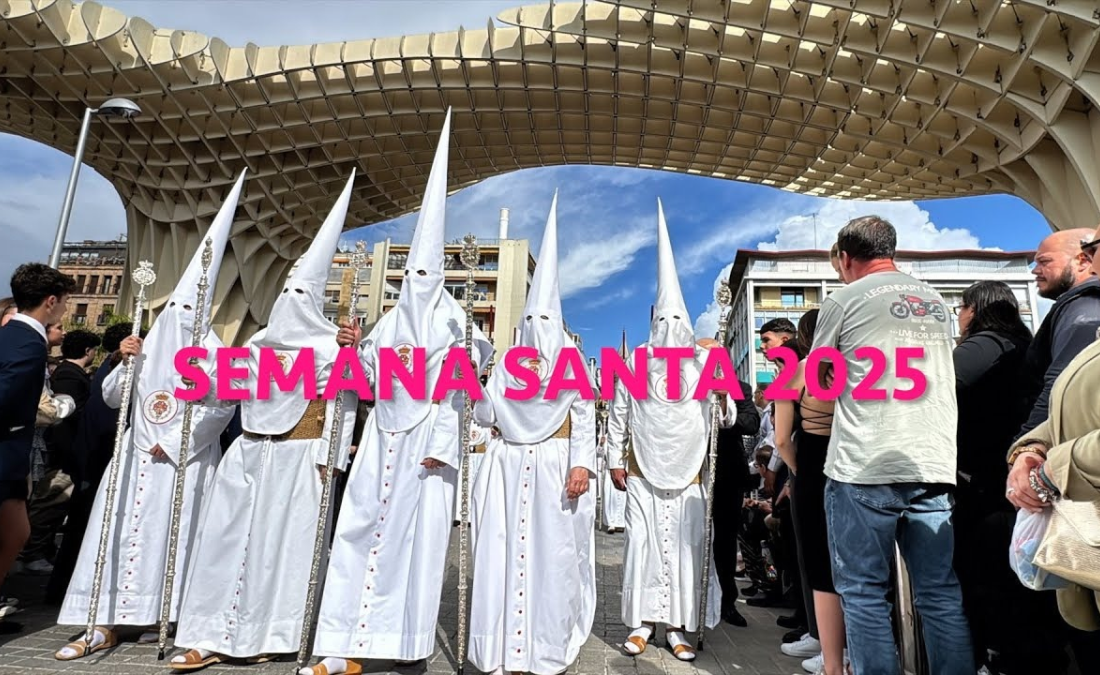
Semana Santa 2025 began on 13 April, with Easter Sunday falling on 20 April. But those dates alone do not explain why the same religious observance can look so different from one Spanish city to another.
Behind the processions is a Christian story. Behind the changing calendar is a calculation. And behind the holiday arrangements are regional decisions that do not always match.
What Does Semana Santa Mean?
Semana Santa is Spanish for “Holy Week.” In Christian tradition, it commemorates the final days before Jesus Christ’s crucifixion and the celebration of his resurrection at Easter.
Spain’s official tourism service describes an observance shaped by religious ceremonies, art and longstanding local customs. Street processions are its most visible expression, but they are part of a wider religious calendar. Treating the week only as a public spectacle leaves out the reason it exists.
The distinction matters when reading about Semana Santa 2025. A church service, a procession and a public holiday may share a date, but they are separate events.
The Confirmed Dates for Semana Santa 2025
The Vatican’s published 2025 calendar confirms Palm Sunday on 13 April, Holy Thursday on 17 April, Good Friday on 18 April and Easter Sunday on 20 April. Its Easter Vigil was scheduled for the evening of 19 April.
The calendar unfolded as follows:
| Date | Observance |
|---|---|
| 13 April 2025 | Palm Sunday — Domingo de Ramos |
| 14 April 2025 | Holy Monday — Lunes Santo |
| 15 April 2025 | Holy Tuesday — Martes Santo |
| 16 April 2025 | Holy Wednesday — Miércoles Santo |
| 17 April 2025 | Holy Thursday — Jueves Santo |
| 18 April 2025 | Good Friday — Viernes Santo |
| 19 April 2025 | Holy Saturday — Sábado Santo |
| 20 April 2025 | Easter Sunday — Domingo de Resurrección |
These dates establish the religious sequence. They do not, by themselves, establish when a particular brotherhood left its church or which streets its procession followed.
Why Did It Fall in April?
Semana Santa does not occupy a fixed week each year because its dates depend on Easter.
The Royal Observatory explains that Western Easter calculations use an ecclesiastical full moon and a fixed equinox date of 21 March. The familiar explanation involving the first Sunday after the spring full moon is a simplification; the calculation does not simply follow whatever moon an observer sees locally.
That resolves one common source of confusion. Semana Santa 2025 was not moved to April by tourism officials or procession organisers. Local programmes were arranged around the established Easter calendar.
Why Seville and Málaga Look Different
Seville and Málaga are both closely associated with Semana Santa, yet their traditions are not interchangeable.
Spain’s official tourism material describes Seville’s brotherhoods carrying pasos, platforms bearing religious sculptures, from churches towards the cathedral. In Málaga, the large platforms are commonly called tronos. Its processions can include applause and spontaneous saetas, devotional songs associated with flamenco.
Those details explain the different atmosphere. The underlying observance is shared, while its public expression reflects the city.
They also require careful reporting. A description of an established tradition is not proof that every planned procession took place exactly as scheduled in 2025.
The Story Extends Beyond Andalusia
Focusing only on Seville and Málaga gives an incomplete picture of Spain’s Holy Week.
Official tourism guidance highlights Gregorian chant during Zamora’s nighttime processions. In Valladolid, it draws attention to religious sculptures by artists including Juan de Juni and Gregorio Fernández. Elche’s Palm Sunday procession is distinguished by its palm leaves.
These are documented local characteristics, rather than evidence of one uniform national event. Depending on the destination, music, sculpture, silence or ceremonial detail may become the defining feature.
Was the Whole Week a Public Holiday?
No. The religious calendar and Spain’s working calendar were different.
Spain’s official 2025 holiday schedule listed Good Friday, 18 April, throughout the country. Holy Thursday, 17 April, was observed in most regions, but not in Catalonia or the Valencian Community. Easter Monday arrangements also varied by region.
A claim that everyone in Spain received the entire week off would therefore be misleading. School breaks and individual workplace arrangements require their own evidence.
What the Dates Finally Reveal
The central answer is clear: Semana Santa 2025 began with Palm Sunday on 13 April and led into Easter Sunday on 20 April.
Understanding the week requires three separate checks: the religious dates, the local procession programme and the regional holiday calendar. Once those are distinguished, the apparent contradictions disappear. It was a shared Christian observance expressed through different communities, rather than a single nationwide programme.
Author bio — replace with verified details before publication:
[Journalist Wikimagazine] is a [verified professional background].
Their reporting focuses on [verified areas of specialisation].